Sharing Early Literacy Learning Journeys

Archive for the ‘Language Experience’ Category

A tawny frogmouth, a blue-tongue lizard and a baby wallaby

What do these three creatures have in common?
They are a live native bird and two animals brought to school this week by Wildlife Carers in their ‘show and tell’ to our Year Ones – as part of our current unit of study about Australian Animals.

It’s Tuesday morning and we have four visiting speakers to talk about caring for animals:

  • two wildlife carers and the above Australian natives
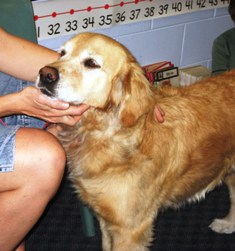
  • a vet’s nurse and her Golden Retriever
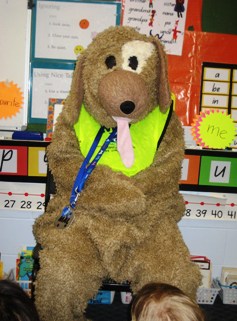
  • a City Council worker and her big mascots, Mal the dog and Milo the cat
  • an RSPCA inspector

The children respond with excited, informed comments, superb drawings and quality, detailed writing.

It really is a blue tongue!
The ‘cute’ baby wallaby is a favourite with many children
The dog is another favourite
This ‘dog’ is special too!
What visiting speakers have you had in your classroom recently?

100 days and Sports Day

On Friday, we celebrated One Hundred Days in Year One. Everything we did was connected to 100. The children brought 100 things to school in various containers and counted them – demonstrating different ways of grouping: tens, fives and random!

Check out this link to my More than Reading Newsletter to find out more about what I do for my 100 Days Celebrations.

On Thursday we have our Junior sports day. The sprints are before lunch and games are after lunch: high jump, discus, relays, parachute and skipping. There’s also a connection to literacy as the children see and sing their team ‘War Cries’. Now let’s get ready to go…

Ready to go!

Anyone have ideas from their 100 Days Celebrations to Share?

Masses of moths in the mango trees

“Have you seen the moths in the mango trees?” asks my colleague as she walks up the stairs.
“No. What moths?”
“Look out the window and you’ll see them.”
I look. I see. I grab my small camera and rush down the stairs.

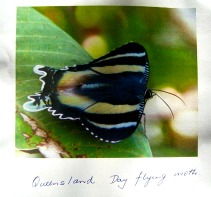
Children, parents and teachers stand in awe of the hundreds of moths flying in and around the big mango trees. Unfortunately I cannot get good photos – the moths  fly fast and rest little. I swing by the library for books on moths. Our resident expert on local wildlife tells us they are Queensland day-flying moths and she downloads and prints pictures from  http://www.panoramio.com/photo/21949158

Queensland day-flying moth (photo papillon 1319)

Soon after the bell I take the children to the mango trees – as do many teachers in our school. The moths flutter and fly in and around the mango trees stopping only to drink the sweet nectar.

Day-flying moths in mango tree

We head back to the classroom all the while watching the moths. We talk. We write – shared writing is about the moths.

Shared writing after seeing the moths

We read books about moths and make a chart about differences between butterflies and moths – but we do not find this moth in the books. Back to Google… 

           How are butterflies and moths different?

       Butterflies                                                   Moths
*Usually fly in daytime                           *Usually fly at night
*Usually bright coloured wings              *Usually dull coloured wings
*Rest with wings above their bodies     *Rest with wings spread out flat
(from its back)
*Antenna may have a knob      *Antenna may be ‘feather-like’ or plain at the end
at the end
*Slender, hairless bodies                      *Fat abdomen and furry bodies

We realise that this moth is called the Day-flying moth for a very good reason!

Tell us about moths or butterflies in your area…

Great Day for ‘ch’: Child brings baby chicks

With thanks to Dr Suess for Great Day for Up, ours is a Great Day for ‘ch’.  
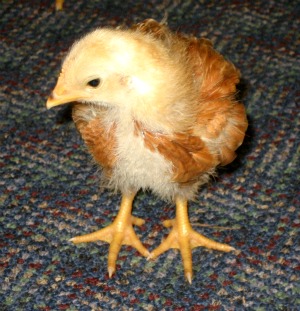
A child brings in four little chicks. They go cheep, cheep, cheep, cheep, cheep.
Children chatter about the chicks and cheer when the chicks run, jump and fly.

The children observe the chicks.  We take photos and make notes.
Children exclaim…
“Look at him jump.”
“Look out! She’s trying to fly.”
“They’re scratching and pecking the floor.”
“Now they’re cleaning their feathers.

Children talk, draw, write, read and share their work.

A lone brown chick on our mat area.

All 4 chicks on the mat area. They didn't want to go on the white paper in the foreground!

Before writing, children brain-stormed words about the chicks

Trevor's drawing of the brown chick to accompany his writing.

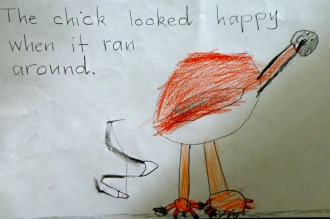
Carl's drawing and dictated sentence about the happy chick.

Mariah’s colourful drawing of 4 yellow chicks.
 
What pets have come into your classroom?
Tell us about an experience with a pet in your classroom.


Celebrating children: Under 8s day

Under 8s week was May 20-27. Our school celebrated our young children on Friday. The canopy and nearby grassy, treed area were dotted with ‘stations’ where children, younger siblings and parents participated in activities including:

  • playdough
  • blowing bubbles
  • making kites, crowns and masks
  • finger, face and easel painting
  • coloured chalk on blackboards and black paper
  • magnetic fishing
  • a giant parachute and
  • dancing


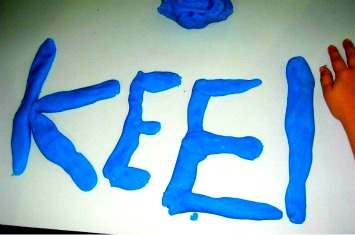
Through the eyes of a child: a playdough person.

I can write my name!

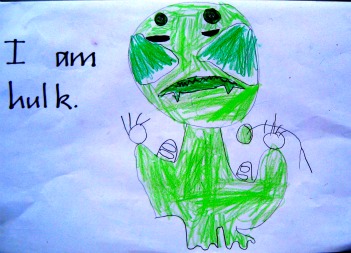
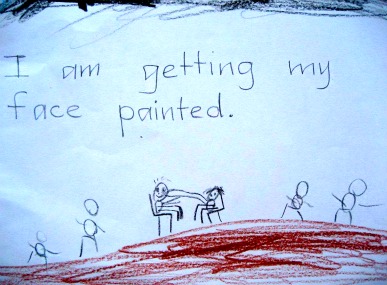
A child had his face painted as Hulk, then drew about it.

Face painting was popular.

The giant parachute was popular too!

 Looking for ideas to celebrate early years children in your school or your classroom? Click here.

What sorts of days for celebrating your children do you have in your state, province or territory?
In your school?
In your classroom?
 

Lively learning on Japan Day

Konnichiwa.
Japanese is the Language Other Than English (LOTE) taught in our school. To raise money for the Japan earthquake and tsunami victims, our LOTE teachers and Japanese parents organised ‘Japan Day’. The student body then participated in various cultural activities on offer. The activities included:

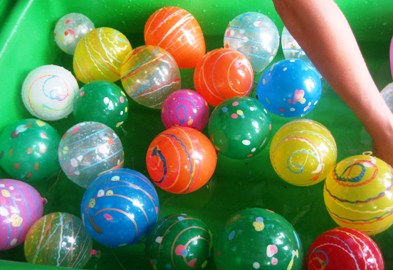
      • Mizu yoyo (water balloon yoyo with an elastic ‘string’)
      • Origami (paper folding)
      • Kimono dress up time
      • Jan Ken Pon (paper, scissors, rock)
      • Kendama (wooden toys)
      • Hachimaki (headbands)
      • Zumba

        Mizu yoyos waiting to be chosen by excited children

        Dressing up in kimonos was a favourite activity
Headbands were a favourite too. This one says ‘Pokemon’

Jan Ken Pon (paper, scissors, rock) was also a favourite – partly because if a child beat the mum opponent, the prize was a lolly!

Sushi and rice balls
 Sushi and rice balls are already on the Tuck Shop lunch menu – but LOTS were eaten on Japan Day.
 
A class book
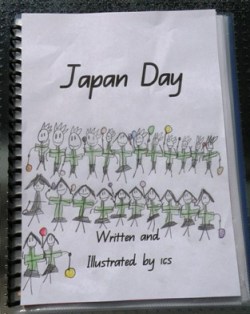
Next day, we brainstormed words about the experience and listed them on the whiteboard. Then, the children wrote about their day. In conversations about the writing, we talked of adding information, details and feelings.  The children drew colourful pictures on their printed pages of writing and added the pages to an A4 display book. Voila!  A class book for shared, independent and home reading.

Class book of children's writing and pictures about Japan Day

Class charts
Digital photos were used for class charts and displays with pictures, captions, labels and ‘stories’.

A visual PowerPoint
Photos and captions of the activities are on a lively and colourful Powerpoint presentation for classroom use.

Classic Language Experience
Japan Day was a classic Language Experience activity where we:

  • shared a hands-on class experience
  • shared spoken, written and visual language about the experience
  • brainstormed, wrote and used words about the experience
  • constructed class sentences about the experience
  • wrote and drew about the experience
  • made a class book from the children’s writing – for shared, individual and home reading
  • used photos, captions and sentences for reading charts and displays of the experience
  • used the children’s writing as high interest reading materials
  • re-lived the experience by interacting and re-reading the children’s work/products 

Sayounara…and please leave a comment

What did you like about Japan Day?

What new Japanese words did you learn?

What did you like at the school Book Fair?

We had a Book Fair at school all this week. I love Book Fairs – they give parents an opportunity to preview and buy books for their children. On Monday my Year Ones went to the library for a ‘book look’ at the wares available. The children wrote two items on their ‘wish list’ papers and later took them home – with the understanding that there were no guarantees parents would buy the items. After school, some parents and children went to the Book Fair to browse and buy. 

Next morning several children happily showed us their purchases. Others talked about possible/probable purchases.  Both interest and excitement were high so, going with the flow, I suggested we make a graph to find out what sorts of books and things the children liked at the Book Fair.  I hasten to add that the graph was meaningful, but not beautiful!

What book or thing did you like at the Book Fair?
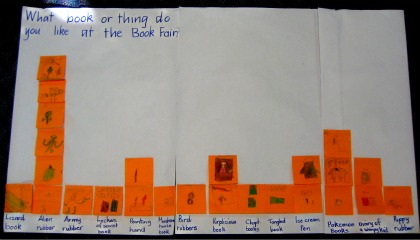
Class Book Fair graph: What book or thing do you like at the Book Fair?

What did we find out?
13 children liked ‘things’
12 children liked books

The details were interesting…

  • 9 children liked rubbers/erasers
  • 2 children liked pointing ‘hands’
  • 2 children liked ‘ice-cream’ pens
  • 5 children liked chapter books
  • 3 children liked Pokémon books (mixture of pictures, stories, information)
  • 2 children liked picture books, Purplicious
  • 1 child liked a non-fiction book , Lizards
  • 1 child liked, Lockers of Secrets (mixture of pictures, information, etc)

Surprise!
I was surprised at the results with just over half the children saying they liked ‘things’ or novelties over books – from a Book Fair.

I wondered why. Was it because:

  • ‘things’ were cheaper at $1, $2, $3, $4
  • picture books were $14, $16 or more
  • chapter books were $10 and above
  • some children were given money to buy ‘something’ – not necessarily a book
  • Book Fairs have changed by adding appealing novelty items to their wares
  • times, children and children’s interests have changed
  • other reasons?

Happy Ending
Whatever the explanation, the children’s love of books shone through at the end of the day. Yalanda couldn’t wait to show me her new  picture book, Purplicious (V. Kann, E. Kann). Capitalising on the moment, I read the book to the class and Yalanda drew about the story. I love her artwork – her characters are expressive and you almost see them move. 
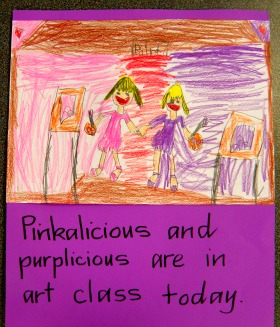
Yalana’s drawing of her new book, ‘Purplicious’.

 Please leave comments

Does your school have Book Fairs?

What do you think about the results from this graph?

Should Book Fairs just sell books?

Toys that move: push or pull?

It’s toy day and the children bring toys that move. They explore push and pull forces to move their toys in different ways like rolling, spinning, bouncing and jumping. They investigate how things roll – and what makes their toys roll.

The children play with their toys to explore what the toys can do.
In a circle, the children look at and talk about the toys.

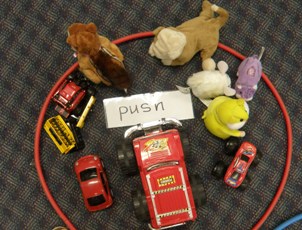
We put hula hoops on the floor with labels inside: push and pull.
Each child decides whether s/he has to push or pull to make the toy move. 

Then, a suggestion: “We need another hoop for spin because E spins her hand top.”   And a question, “Will E’s hand top spin longer than F’s beyblade?”
What do you think?

Which will spin longer – a small hand top or a Beyblade? 

Spinning top

Beyblade

Other questions come thick and fast:
           
Do you push and/or pull the levers to make a remote-control truck go? 

A child pushes and pulls the levers for the remote control truck to go

Do toy cars and trucks go better on carpet, vinyl or cement? Why?

What happens to a toy car on a steep ramp? What happens if you change the slope of the ramp?

Why does a tennis ball bounce higher on vinyl rather than carpet or grass?

For most of these toys to go, do you push or pull?

Most of the toys here today move with a 'push'


 Please leave a comment.

What force do most of your children’s toys use?

What toys do your children like to play with?  Why?