Sharing Early Literacy Learning Journeys

Archive for July, 2011

A tawny frogmouth, a blue-tongue lizard and a baby wallaby

What do these three creatures have in common?
They are a live native bird and two animals brought to school this week by Wildlife Carers in their ‘show and tell’ to our Year Ones – as part of our current unit of study about Australian Animals.

It’s Tuesday morning and we have four visiting speakers to talk about caring for animals:

  • two wildlife carers and the above Australian natives
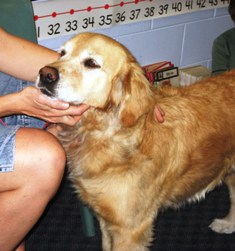
  • a vet’s nurse and her Golden Retriever
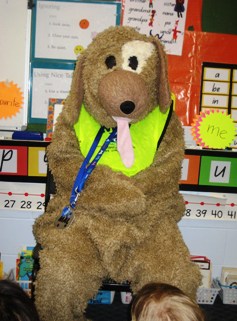
  • a City Council worker and her big mascots, Mal the dog and Milo the cat
  • an RSPCA inspector

The children respond with excited, informed comments, superb drawings and quality, detailed writing.

It really is a blue tongue!
The ‘cute’ baby wallaby is a favourite with many children
The dog is another favourite
This ‘dog’ is special too!
What visiting speakers have you had in your classroom recently?

Bins and baskets of books

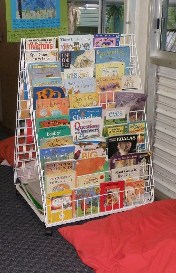
‘How do you store your books?‘ was a question in the daily5 chat last Saturday. Early years teachers organise, store and use books in their classrooms in ways that suit them and their students.

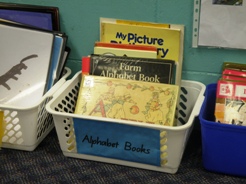
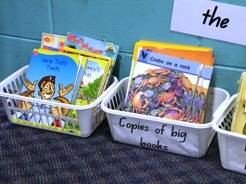
Using shelves, baskets and labelled bins to organise and store books makes it easy to find a book and return it where it belongs. The books are sorted and organised in a variety of ways:

  • authors: Dr Suess, Mercer Mayer, Mem Fox, Pamela Allen, Paul Jennings
  • series: Grug, Clifford, Spot, Rascal, Zac Power
  • topics of interest: frogs, snakes, spiders, space, pets, Pokemon
  • alphabet books: varied
  • copies of big books: multiple small copies of current big books
  • class books we have made: Our C Book, Our Book of Rhymes, 100 day party, Magnificent Me
  • books we have read: a variety of books that we read as read alouds
  • levelled books: colour coded in levels
  • number books: varied
Baskets of books
A bin of alphabet books
Small copies of current big books
An assortment of class-made books
Colour-coded levelled books
A triangular shelf for all sorts of books
  • How do you organise and store your books in the classroom?

100 days and Sports Day

On Friday, we celebrated One Hundred Days in Year One. Everything we did was connected to 100. The children brought 100 things to school in various containers and counted them – demonstrating different ways of grouping: tens, fives and random!

Check out this link to my More than Reading Newsletter to find out more about what I do for my 100 Days Celebrations.

On Thursday we have our Junior sports day. The sprints are before lunch and games are after lunch: high jump, discus, relays, parachute and skipping. There’s also a connection to literacy as the children see and sing their team ‘War Cries’. Now let’s get ready to go…

Ready to go!

Anyone have ideas from their 100 Days Celebrations to Share?

Masses of moths in the mango trees

“Have you seen the moths in the mango trees?” asks my colleague as she walks up the stairs.
“No. What moths?”
“Look out the window and you’ll see them.”
I look. I see. I grab my small camera and rush down the stairs.

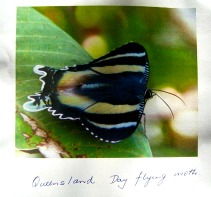
Children, parents and teachers stand in awe of the hundreds of moths flying in and around the big mango trees. Unfortunately I cannot get good photos – the moths  fly fast and rest little. I swing by the library for books on moths. Our resident expert on local wildlife tells us they are Queensland day-flying moths and she downloads and prints pictures from  http://www.panoramio.com/photo/21949158

Queensland day-flying moth (photo papillon 1319)

Soon after the bell I take the children to the mango trees – as do many teachers in our school. The moths flutter and fly in and around the mango trees stopping only to drink the sweet nectar.

Day-flying moths in mango tree

We head back to the classroom all the while watching the moths. We talk. We write – shared writing is about the moths.

Shared writing after seeing the moths

We read books about moths and make a chart about differences between butterflies and moths – but we do not find this moth in the books. Back to Google… 

           How are butterflies and moths different?

       Butterflies                                                   Moths
*Usually fly in daytime                           *Usually fly at night
*Usually bright coloured wings              *Usually dull coloured wings
*Rest with wings above their bodies     *Rest with wings spread out flat
(from its back)
*Antenna may have a knob      *Antenna may be ‘feather-like’ or plain at the end
at the end
*Slender, hairless bodies                      *Fat abdomen and furry bodies

We realise that this moth is called the Day-flying moth for a very good reason!

Tell us about moths or butterflies in your area…

Please don’t ask me…

Children write about items of interest – holidays or not

Written by Dr Coral Swan and published in Practically Primary in February 2010

After attending the ALEA conference in Hobart in July 2009 and hearing the words ‘Please don’t ask me to write or draw about what I did in the holidays’, I decided to look closely at what the children did write about on the first day back at school in third term.

My Year One students write about anything of interest in their journals on Monday, Tuesday and Wednesday mornings as an essential part of our literacy block (see schedule below).

Our morning

1. Roll
2. Calendar
3. Shared reading: big books/charts
4. Shared writing: class news
5. Co-operative show and tell
6. Journals
7. Home-reading books
8. Sharing time
9. Lunch
10. Outside play

Table 1: Morning schedule on board

The pre-writing talking time of co-operative show and tell (Swan, 2009) is central to journal writing because it enables the children to talk in small groups about topics of interest before moving to writing. It’s as if: ‘I have something to talk about – I have something to write about’.

Sometimes the children visualise what they will draw and write. This helps them focus on personal or class interests and the immediate task of writing and/or drawing.

In journals, children demonstrate what they can do with writing: construct sentences, form letters, spell words, leave spaces, label pictures, use capital letters, add punctuation and connect text and images. Children also read as they write, and after completing their writing, they read it aloud to me and/or peers.

Some children use classroom resources to help them write: Velcro words from word walls, sentence starters from fish-netting and word cards from labelled boxes. Children may also copy words from lists, charts and books. A spirit of help and co-operation pervades the room as children respond to classmates’ requests about letters, words and writing.

What did the children write about on day one, term three?

• events in their holidays
• objects they brought to school (just as they do any school day)
• friend’s objects
• going to the local agricultural show after school, that day
• an upcoming birthday
• family events from the previous day
• words from class word walls

What does the children’s writing show?

Children write about meaningful experiences and objects:

• 2 mentioned an event as ‘over the holidays’ (visiting town X with cousins)
• 3 mentioned an event without reference to ‘the holidays’
• 9 wrote about objects of interest brought from home
• 3 wrote about objects brought by friends
• 3 wrote about future events of interest to them as individuals – 2 to the local show and 1 an upcoming birthday
• 2 wrote about meaningful events on the previous day (parent’s work and cousin’s place) without reference to ‘the holidays’
• 1 copied words from the word wall (family and walked) but indicated this was not a family event

Samples of children’s journal writing:

An event mentioning the holidays
On the holidays my cousins came up to see us. We went to the reef with them. We stayed in a hotel with them. They left on Tuesday.”

“I went on the big boat that came into town.”

An event – but not mentioning holidays
I went swimming at the caravan park at Nana and Granddad’s.”

Personal objects of interest
Yesterday I got NRL cards. I have mascots. They have legs. They look cool except the Eels. The Kangaroos are AFL. The Titans look like they have armour. It looks cool.”

“I like my tiger. It is cute and very soft. It has a pink bow. It has lots of stripes. The stripes are black. It has purple and black eyes. I like my flower. It is cute with a smiley face.”

A future event of personal interest
I am going to the YYY show at 2 o’clock today. My Nana maybe will get me a show bag. “I will go on the rides maybe,” said X. I will have fun today. I like the big slide.”

What does the children’s writing tell me?

Children write about:

• what they are interested in, and
• what is meaningful to them

Significantly, that tenet doesn’t change whether it’s after holidays or not.

Why do I include journal writing in our literacy mornings?

Journals work in my classroom because children demonstrate what they know about language as they write/draw about interests and meaningful experiences (Swan, 2009). Subsequent child-teacher conversations develop and extend children’s learning through sharing, revising and explicit teaching.

Journal writing on paper or computers enables children to:

• choose what to write about
• decide how to write about it
• demonstrate understanding of written language
• develop independence as they write for various purposes
• learn more about using language (by calling on knowledge and experiences to integrate new understandings)
• gain confidence as they write (and read) about interests
• enjoy writing/drawing
• share their writing/drawing with others

What is my role in supporting, developing and extending this writing?

Writing practices and explicit teaching

In everyday classroom life we interact and use meaningful spoken, written and visual language in:

• modelled writing
• shared writing or joint construction
• independent writing
• free writing
• sharing time and
• celebrating writing accomplishments

Oceans of print

Children use meaningful print and images in the classroom to assist their writing and reading. The room contains:

• functional print
• word walls, lists, charts and banks
• word families
• sentence starters
• alphabet and word placemats
• labels, directions and instructions
• questions and reflections
• class books
• children’s books and topic books
• a range of boards, papers and pens for writing

Teacher-child conversations

During writing time, teacher-child conversations encourage, support and scaffold children’s attempts at writing. The conversations develop and extend learning because the conversation is immediately relevant to that child.

Written responses

In hearing children read their writing I often respond with a written comment, query or question to:

• participate as an interested reader
• demonstrate handwriting
• model correct spelling
• encourage more writing
• revise written conventions
• extend specific learning

Group sharing time

In sharing time I use children’s writing to model or explain language features and written conventions, e.g. a possessive apostrophe. Sharing time also enables us to provide constructive feedback to the writer by:

• acknowledging effort
• encouraging clarification
• seeking reasons for writing decisions
• making links between writing/ drawing
• celebrating accomplishments

Conclusion

Using children’s lives and experiences as vehicles for their early literacy learning fits with my deeply held belief that children learn best from their interests and  experiences—which are at the core of their talking, writing (and reading). Co-operative show and tell, prior to writing, affords children opportunities to talk in small groups about personal and class interests and experiences. Writing follows – and rarely do I hear, “I don’t know what to write” because children actively participate in the talking-sharing time and then, choose what to draw and write about.

Assigning a topic like ‘What I did in the holidays’ is not necessary when children are familiar with making choices in their writing. Children may well write about something they did in the holidays – but it does not have to be prefaced with ‘In the holidays….’ Children write about meaningful experiences and items of interest – holidays or not.

References

Swan, C. (2009). Teaching Strategies for Literacy in the Early Years. Norwood, SA. Australian Literacy Educators’ Association Ltd.

Copyright © C. Swan 2010 PP article: Children write about items of interest – holidays or not. (with some revsions and no photos)

Second semester starts: What’s in store?

The morning sun struggles through grey clouds and a gentle breeze greets me as I walk to the beach. The sand is cold beneath my feet. Small waves tumble forth leaving frothy white lace at the water’s edge. A dozen thoughts race through my head. It’s back to school tomorrow for the start of second semester. What’s in store for the first week?

Monday – Early Years’ professional development
The first day of a new term is traditionally pupil free with professional development (PD) for teachers. Today I present a session, in keeping with the brief, ‘focus on literacy in the early years’, with practical ideas for the classroom and links to the curriculum’. More on my session later…

Tuesday – children return
Talking, talking, talking. That’s Tuesday. The children always have so much to say after two weeks away from school, classmates and friends. Everyone gets to share – and to draw and write. Journal writing is especially exciting because as always, the children are free to write on topics of interest – no need for the restrictive request:  What did you do in the holidays?

Read more in my related article, Children write about items of interest – holidays or not’,  published in Practically Primary in February 2010.

Wednesday – new ‘old’ books to share
I can’t wait to share some new books with the children on Wednesday. I am not a shopper but sometimes I browse – books stores and second hand stores are my favourites. On the holidays I found several ‘old’ books and snapped them up:
The cat on the mat and friends, by Brian Wildsmith

Cat on the Mat and Friends

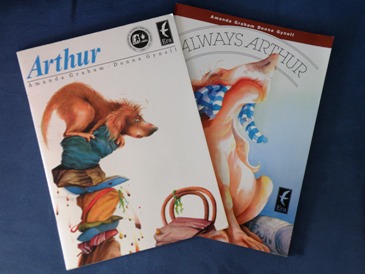
Arthur and Always Arthur, by Amanda Graham

Arthur and Always Arthur

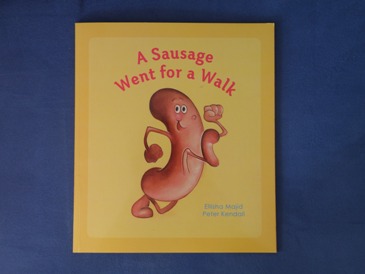
A Sausage Went for a Walk, by Ellisha Majid & Peter Kendall
I remembered this one because one year a boy came to school already reading and he read this book to the class on the second day of school – interestingly, I hadn’t seen it since.

A Sausage Went for a Walk

Say ‘Hello’ Wombat by Steve Parrish
This one is new. It has superb Parrish pictures of Australian animals with a repetitive and rhythmical storyline – so it will be interesting to see if the children take to it or not. Will it be taken as a ‘story’ book or as an appealing book to read? Stay tuned.

Say "Hello" Wombat

Friday – 100 day party
We have been counting and recording the number of days at school all year and it’s time to celebrate 100 days in Year One. Well, actually it will be day 99 for us – but we could not have a ‘party’ on a Monday!

Last year's 100 day count

P.S. Twitter
Over the past few days I had a taste of the Australian Literacy Educators’ Association (ALEA) conference in Melbourne via Twitter at @ALEA. Participants tweeted during sessions with notable comments from presenters, including Debbie Miller, Gay Su Pinnell, Susan Hill and Trevor Cairney. Yesterday I received Trevor Carney’s plenary address on his blog at   http://trevorcairney.blogspot.com/ and I was excited to read his statement ‘the words of literature are economical and powerful’ – with clear examples from books to demonstrate his point.

For people still on holidays, enjoy!
For children and teachers returning to school this week, enjoy!

Are you trying something new with your class this term?