Sharing Early Literacy Learning Journeys

Archive for the ‘Reading’ Category

Great Day for ‘ch’: Child brings baby chicks

With thanks to Dr Suess for Great Day for Up, ours is a Great Day for ‘ch’.  
A child brings in four little chicks. They go cheep, cheep, cheep, cheep, cheep.
Children chatter about the chicks and cheer when the chicks run, jump and fly.

The children observe the chicks.  We take photos and make notes.
Children exclaim…
“Look at him jump.”
“Look out! She’s trying to fly.”
“They’re scratching and pecking the floor.”
“Now they’re cleaning their feathers.

Children talk, draw, write, read and share their work.

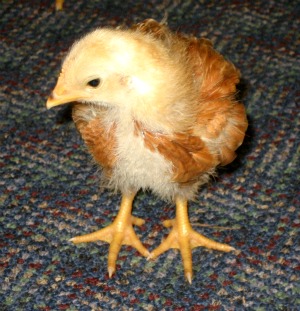
A lone brown chick on our mat area.

All 4 chicks on the mat area. They didn't want to go on the white paper in the foreground!

Before writing, children brain-stormed words about the chicks

Trevor's drawing of the brown chick to accompany his writing.

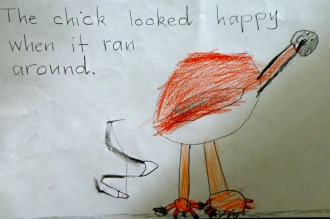
Carl's drawing and dictated sentence about the happy chick.

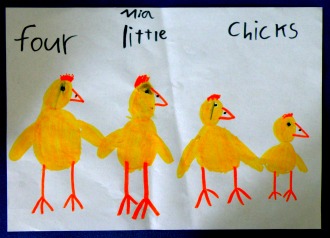
Mariah’s colourful drawing of 4 yellow chicks.
 
What pets have come into your classroom?
Tell us about an experience with a pet in your classroom.


Celebrating children: Under 8s day

Under 8s week was May 20-27. Our school celebrated our young children on Friday. The canopy and nearby grassy, treed area were dotted with ‘stations’ where children, younger siblings and parents participated in activities including:

  • playdough
  • blowing bubbles
  • making kites, crowns and masks
  • finger, face and easel painting
  • coloured chalk on blackboards and black paper
  • magnetic fishing
  • a giant parachute and
  • dancing


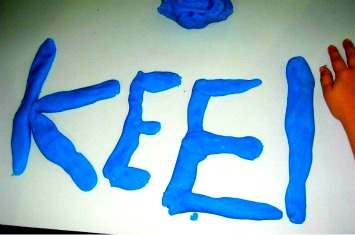
Through the eyes of a child: a playdough person.

I can write my name!

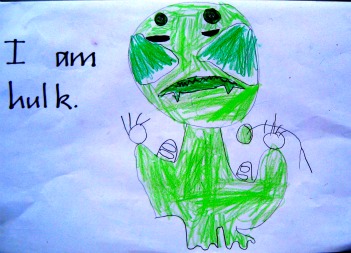
A child had his face painted as Hulk, then drew about it.

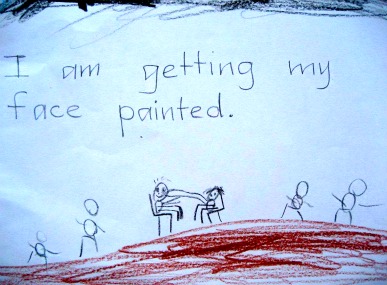
Face painting was popular.

The giant parachute was popular too!

 Looking for ideas to celebrate early years children in your school or your classroom? Click here.

What sorts of days for celebrating your children do you have in your state, province or territory?
In your school?
In your classroom?
 

Lively learning on Japan Day

Konnichiwa.
Japanese is the Language Other Than English (LOTE) taught in our school. To raise money for the Japan earthquake and tsunami victims, our LOTE teachers and Japanese parents organised ‘Japan Day’. The student body then participated in various cultural activities on offer. The activities included:

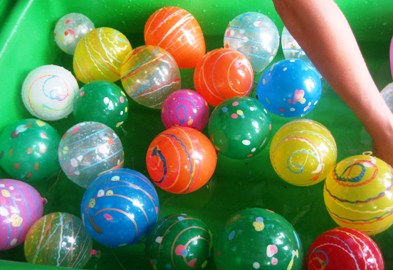
      • Mizu yoyo (water balloon yoyo with an elastic ‘string’)
      • Origami (paper folding)
      • Kimono dress up time
      • Jan Ken Pon (paper, scissors, rock)
      • Kendama (wooden toys)
      • Hachimaki (headbands)
      • Zumba

        Mizu yoyos waiting to be chosen by excited children

        Dressing up in kimonos was a favourite activity
Headbands were a favourite too. This one says ‘Pokemon’

Jan Ken Pon (paper, scissors, rock) was also a favourite – partly because if a child beat the mum opponent, the prize was a lolly!

Sushi and rice balls
 Sushi and rice balls are already on the Tuck Shop lunch menu – but LOTS were eaten on Japan Day.
 
A class book
Next day, we brainstormed words about the experience and listed them on the whiteboard. Then, the children wrote about their day. In conversations about the writing, we talked of adding information, details and feelings.  The children drew colourful pictures on their printed pages of writing and added the pages to an A4 display book. Voila!  A class book for shared, independent and home reading.

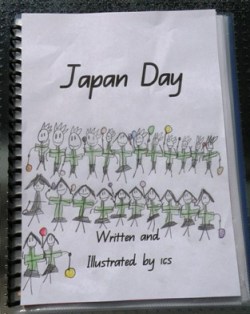
Class book of children's writing and pictures about Japan Day

Class charts
Digital photos were used for class charts and displays with pictures, captions, labels and ‘stories’.

A visual PowerPoint
Photos and captions of the activities are on a lively and colourful Powerpoint presentation for classroom use.

Classic Language Experience
Japan Day was a classic Language Experience activity where we:

  • shared a hands-on class experience
  • shared spoken, written and visual language about the experience
  • brainstormed, wrote and used words about the experience
  • constructed class sentences about the experience
  • wrote and drew about the experience
  • made a class book from the children’s writing – for shared, individual and home reading
  • used photos, captions and sentences for reading charts and displays of the experience
  • used the children’s writing as high interest reading materials
  • re-lived the experience by interacting and re-reading the children’s work/products 

Sayounara…and please leave a comment

What did you like about Japan Day?

What new Japanese words did you learn?

Toys that move: push or pull?

It’s toy day and the children bring toys that move. They explore push and pull forces to move their toys in different ways like rolling, spinning, bouncing and jumping. They investigate how things roll – and what makes their toys roll.

The children play with their toys to explore what the toys can do.
In a circle, the children look at and talk about the toys.

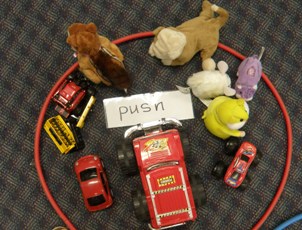
We put hula hoops on the floor with labels inside: push and pull.
Each child decides whether s/he has to push or pull to make the toy move. 

Then, a suggestion: “We need another hoop for spin because E spins her hand top.”   And a question, “Will E’s hand top spin longer than F’s beyblade?”
What do you think?

Which will spin longer – a small hand top or a Beyblade? 

Spinning top

Beyblade

Other questions come thick and fast:
           
Do you push and/or pull the levers to make a remote-control truck go? 

A child pushes and pulls the levers for the remote control truck to go

Do toy cars and trucks go better on carpet, vinyl or cement? Why?

What happens to a toy car on a steep ramp? What happens if you change the slope of the ramp?

Why does a tennis ball bounce higher on vinyl rather than carpet or grass?

For most of these toys to go, do you push or pull?

Most of the toys here today move with a 'push'


 Please leave a comment.

What force do most of your children’s toys use?

What toys do your children like to play with?  Why?


Classroom reading everyday – let me count the ways…

Twice in your life you know you are approved of by everyone – when you learn to walk and when you learn to read ~ Penelope Fitzgerald

Seeing children blossom into readers is one of the thrills of my professional life. I love to see the moment when children discover that the squiggly lines on a page form letters, the letters form words and the words make sentences.

Learning to read is an extraordinary feat—it requires children to physically alter the architecture of their brains. This takes time! Steven Pinker puts it this way: “Children are wired for sound, but print is an optional accessory that must be painstakingly bolted on.”

And if you ever wondered why young children seem such natural and creative artists, it’s because babies’ brains are massively wired for picture (John Medina, 2008). Having a brain wired for picture and sound – not for word – doesn’t sound very promising does it? However this should be no surprise because until about 2000 years ago, there was no alphabet, hence no reason for us to learn how to ‘convey language through vision’  as Stanislas Dehaene so eloquently describes the act of reading.  We now expect children to accomplish this process in as little as 2000 days! (Mary Ann Wolf, 2008).

Children need all the help they can get as they grapple with connecting parts of their brains that weren’t previously talking with each other. How, as teachers, do we assist children to connect the visual, auditory and language centers of their brains?

One answer is to involve children in reading everyday in a variety of ways. Why? Because children’s brains respond to novelty, variety and repetition; children thrive on interactions with others and they pay particular attention when involved in activities that have purpose and/or meaning to them.

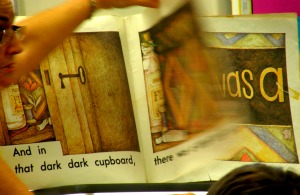
Children predict, comment & question as we read from the big book, ‘A Dark, Dark Wood’. It’s an ‘easy-to-read book’ full of lyrical language, repetition & suspense.

8 ways to engage children in meaningful reading in the classroom everyday:

  1. Reading aloud (children hearing reading)
  2. Shared and interactive reading (from big books, boards, charts and screens)
  3. Independent reading and free reading (choosing books of interest, choosing ‘good fit’ books and reading to self)
  4. Partner/buddy reading (reading to someone)
  5. Quiet reading (children choose books to read quietly on their own)
  6. Teacher monitoring (reading to me and I note what each child is ‘doing’ in reading aloud)
  7. Home reading (reading aloud to someone at home)
  8. Reading own writing (children  re-read as they write)

The more reading the better. However, regardless of how much is done, reading that isn’t enjoyable isn’t fun – and slim are the chances of nurturing children as passionate readers. One of the easiest ways to make reading enjoyable is to allow the children lots of choice in the books they read.

Each time a child discovers he can read I marvel that it’s taken him a ‘lifetime’ to begin reading words that he will soon recognise in just 500 milliseconds – less time than the blink of an eye (Mary Ann Wolf, 2008).

Bo Bear’s Backpack – meaningful writing and reading

Children learn better when they are actively engaged in talking, drawing, reading and writing about items and experiences that are meaningful to them. Not only does this sound sensible – it’s grounded in the latest peer-reviewed research into the brain and learning. And it’s been one of my core beliefs about how children learn for many years. But how do we get children actively engaged in writing and reading about meaningful items and experiences? Let’s answer that question by unravelling the story of Bo Bear’s Backpack.

The centrepiece of the backpack:

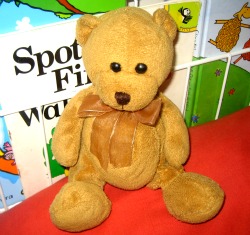
The centrepiece of Bo Bear’s Backpack is a soft toy. I have always used a toy animal because most children are interested in animals. This year it’s a bear. Other years it’s been Ziggy Zebra, Tim-Tam Tiger, Cloe Crocodile, Twin Teddies… If the idea for the animal springs from a class event or a unit of work, so much the better.

I added the AFL football to Bo Bear’s backpack to spark the interest of  boys. The AFL football and backpack were a fortunate coincidence – only a few days prior, the children had a visit from AFL player ‘Fish’! So the football and  backpack immediately connected all the children with an exciting meaningful experience.

Naming the bear:

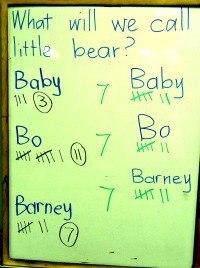
We had great fun preparing Bo Bear’s backpack on Friday. First, the little brown bear had to have a name. We gathered in our mat area and brainstormed names that started with ‘b’. The children came up with 11 possibilities which I scribed on the small whiteboard:
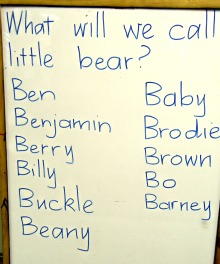
The children suggested 11 names for our bear.

 The vote:

In the afternoon we voted for a name. Baby, Bo and Barney won with 3 votes each – a tie. It was down to Baby, Bo or Barney. We voted again – this time by secret ballot. The children went to different parts of the room, wrote the name they wanted for the bear on a piece of paper, folded it and placed it in the box I was holding. The result – 7 votes each! Our bear was still unnamed. One child said, “We could vote again.” So we did – once again, by secret ballot (more meaningful writing and numeracy).

We tally the votes - 'Bo' is a clear winner, by 4.

 The winner:

This time Bo won – much to the chagrin of the Barney supporters! One girl commented, “Bo Bear doesn’t have the nice sound of Barney Bear.” I silently agreed, but replied that we had to go with the name that most people liked. Democracy in action! Bo Bear was named and ready to go in the backpack.

Bo Bear, named and ready to go in the AFL backpack.

What goes in Bo Bear’s backpack?
  1. Bo’s journal
  2. Writing pencils and a packet of wind-ups
  3. 6 books about bears and/or ‘b’
  4. ‘Snap’ number cards
  5. A small football  

Bo Bear, pack & contents ready to go home with the first child on Monday.

What happens when the backpack goes home?

I choose a capable child (with supportive parents) because the first entry in Bo’s journal needs to be a quality ‘model’. At home, the child…

          *plays with Bo Bear and shares the toys and books with the family
          *draws and writes about Bo Bear (or another interest) in the journal
          *reads the journal to the parents
          *reads the books with his/her parents

Some parents insert photos of their child playing with Bo Bear.

The children, draw, write and read in Bo's journal. Sometimes parents paste photos of the children in the journal.

 What happens the next morning?

The next morning, the child shares the backpack with the class and teacher. S/he talks about playing with the soft toy at home. The child reads the sentence from the journal and shows the drawing and writing to the class. We celebrate the child’s efforts. S/he may show which backpack books were read with the family. Sometimes I read one of the backpack books to the class. Comments, questions and discussion arise from other children.

Once the Journal is full, it stays in the backpack as another book to read and we make a new journal to add to the pack – more reading and writing and sharing!

Bo Bear’s Backpack ticks 10 learning boxes:

Not only do children become better readers and writers, but activities like Bo Bear’s Backpack tick 10 of the ‘keys to learning’ boxes:

          *Active engagement          
          *Interests embedded in the learning
          *Immediate and cycled repetition
          *Exercise – playing with the football
          *Talking aloud
          *Interactions with interested others
          *Purposeful learning
          *Stimulating the senses (auditory, visual, tactile)
          *Encouraging higher order thinking
         
Learn more about  Backpack Activities:

See ‘Backpacks to Go’ in Teaching Strategies for Literacy in the Early Years (Swan, 2009, p. 6-10). Extensions include:

          *An Author’s backpack
          *Email Granny’s backpack
          *Traditional tales backpack
          *Rhyming stories, songs and chants backpack         

In addition, there are backpack resource websites and parent letters.

Click on the photo below to view a list of all 41 literacy strategies:

Teaching Strategies for Literacy in the Early Years.

 View a sample strategy.  (Print and use).
Order at www.morethanreading.com