Sharing Early Literacy Learning Journeys

Archive for October, 2012

Why did it take so long…?

At the breakfast table, my husband looks at the book. It’s Mary O’Neill’s poems about colours, Hailstones and Halibut Bones  (1961, Tadworth, Surrey: The World’s Work). I was reading it after a dull, rainy yesterday to remind myself of O’Neill’s ‘grey’ words.

He says, “It’s not a ‘good fit’ book for me.”
But, when he looks at the blurb on the back cover flap and starts reading, something changes. He stops. Re-reads. Reads the words aloud to me.

‘Never let a thought shrivel and die
For want of a way to say it…’

I stop in my tracks. He reads again. I listen. We savour her words, look at each other and wonder, “Why did it take so long for us to discover this?”

‘Never let a thought shrivel and die
For want of a way to say it,
For English is a wonderful game
And all of you can play it.
All that you do is match the words
To the brightest thoughts that come in your head
So that they come out clear and true
And handsomely groomed and fed –
For many of the loveliest things
Have never yet been said.”

(O’Neill, M. 1966. Words Words Words).

May you and your children enjoy these inspirational words to spur budding writers.

A new bird on the block…reminds me of classroom life

Early Monday morning. Cool 10C. Cloudy. Dull. Grey. Intermittent light rain. Slow start today.  Curl up on the living room couch. Sip vanilla hazelnut coffee. Gaze out the picture window at a small wood bird-feeder in the front garden. Framed by two dwarf Alberta spruce trees. Chickadee arrives. A black-capped chickadee with ‘black cap, black bib and white cheeks’ (Peterson, p. 119).
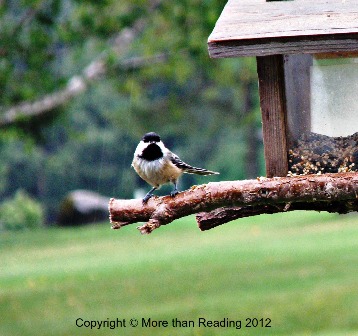
Chickadee feeds. On niger seeds. And a mixture of other small seeds. Feeds again. Zings to a big, blue spruce tree nearby.  Another small bird lands on the cedar perch.
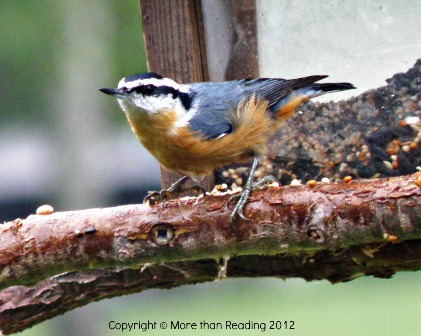
Pecks at seeds. Red-orange breast feathers – some might say cinnamon. Blue-grey back and wing  feathers. Black and white stripes at head.
New bird on the block! What is it?
Flies frantically  fast over the roof of the house. Chickadee returns. Leaves immediately when the ‘new’ bird appears. Heirachy is established.

Reach for the bird books. In the old, black, barrister bookcase – handed down through the family. Part of our large home library. Organised. Know exactly where to look. Second shelf from the top. Next to wood heat, wilderness and trees. Open the bird book. Look for the name of  the ‘new’ bird. In the chickadee family? Wren family? Finch family? Search the index.

Reminds me of classroom life. Searching for information about Harry’s frog. A green frog. Children observing and describing the frog. Sharing what they know. Getting frog books from the frog ‘basket of books’. Thinking aloud and demonstrating ‘finding information’. Going to the index. Looking up names. Green frogs. Tree frogs. White-lipped green tree frog.  That could be it. Turning to p.25. Reading headings. Finding out…

Do the same with the bird book. Search the index. Look up names. Examine colourplates and written descriptions. A nuthatch?

A nuthatch is a ‘small, chubby tree-climber, with a long bill and a stubby tail’ (Peterson, p. 120).  Is that a long bill? The bird nudges the small seeds around with his pointy beak as if he’s searching for a particular seed. Many seeds drop to the green grass below.

More information. Reddish breast. ‘Black line through eye’ (Peterson, Plate 44). Definitely a black stripe through his eye. Is that it?  A red-breasted nuthatch?

This nuthatch is skittish. He pecks and quickly turns his head from side to side. Constantly looking round… for enemies, I suppose. Blue Jays? Red-tailed hawks? Humans?

In the next half hour, we see two black-capped chickadees and the red-breasted nuthatch taking turns at the bird-feeder. Two small, brown sparrows also come and go. We take photos – but the birds are fast! Chickadees peck, peck, peck and flit, flap, fly fast to the protection of the big, blue spruce. Hide in the thick, prickly boughs. Sparrows quickly disappear over the house roof. Nuthatch returns. Eats.

A rare moment. Nuthatch and chickadee are at the feeder at the same time. Nuthatch eats with his tail in the air. Chickadee hides at the side.

My favourite part in learning about a bird is to look at the illustration and immediately check for similarities on the real bird out the window. It’s like a puzzle. Find a clue. Does it fit? Double check. I love this way of learning – reminds me of classroom life. I’ll know this bird forever…

Peterson, R.T. (1947).  A Field Guide to the Birds: eastern land and water birds. Boston: Houghton Mifflin Company.

Co-operative Show and Tell comes to Bushland Primary School

Guess what happens during Co-operative Show and Tell in Ms Squilley Squirrel’s Year One classroom at Bushland Primary School today.

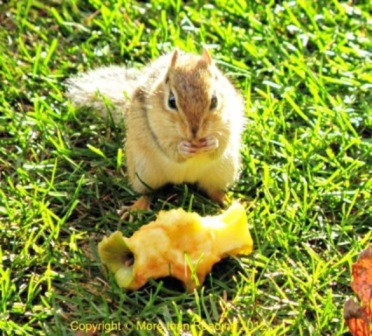
Charlie Chipmunk brings a freshly-chewed apple core that he finds in the grass at the base of a red maple tree. Ms Squilley Squirrel doesn’t see anything interesting in a chewed up, old apple core. But it’s the most exciting thing that’s happened to Charlie Chipmunk this morning and he can’t wait to talk about it – and that’s all that matters.

Charlie Chipmunk and Doris Dove choose to share with each other. Often her students choose friends. Ms Squilley Squirrel doesn’t know why Charlie and Doris choose each other, they just go together. And that’s okay. Doris doesn’t bring anything – and that’s okay too – Doris talks about how she likes to sit on a telephone wire at sunrise and coo peacefully.

Black-eyed Susan and Black-eyed Sarah sway closer together, petal-to-petal, ready to talk and make black-eye contact. First thing this morning, Susan excitedly tells Ms Squilley Squirrel about a black and yellow bumble bee that visits her yesterday. And now, Susan can’t wait to tell Sarah about it .

Hetty House Finch and Chucky Chickadee get ready to turn to each other. Hetty is bursting to tweet about her close encounter with a red-tailed hawk and Chucky is excited about how he flew away fast and escaped the wrath of a Red-breasted Nuthatch at the bird feeder this morning.

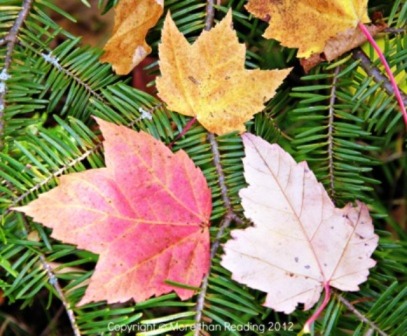
Lucy, Larry and Lola Leaf make a group of three for their co-operative show and tell because, coincidentally, they all want to talk about their exciting falls to the ground.

Canada Geese waddle together and make a group of four. Glenda Goose asks Gloria Goose which way her family will fly as winter approaches. Gloria replies they’ll fly straight south. Gregory Goose chimes in that his family is going to Georgia then Gladys Goose adds that she is heading to Mexico with her cousins.

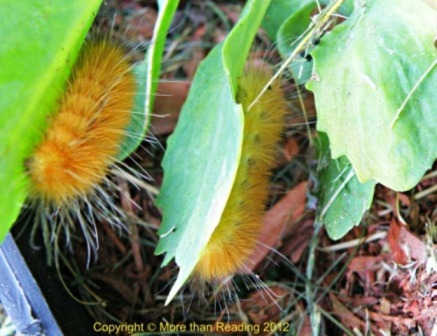
Woolly Bear, who rarely talks in front of the others, is happy to talk when the animals are in small groups. He talks to his friend Golden Woolly Bear about his favourite food, sedum leaves and to his surprise, he learns that Golden Woolly Bear loves sedum leaves too!

Some students finish co-operative show and tell. Charlie Chipmunk can’t wait to draw and write about the apple core he had shown Doris. He races to the flower pot and digs up his journal. Soon, everyone is drawing and writing in their journals. Ms Squilley Squirrel calls it Journal time.

But that’s another story…

Teachers need inspiration…

An e-mail this morning, from a teacher friend in Australia, captures my attention. She alerts me to a request for help from another P-2 teacher.  It’s the beginning of term 4 and Yolanda, (not her real name) is running low on ideas and inspiration regarding topics for her children’s talking and sharing times.

I want to act immediately, get something out that could be useful right away – a talking/sharing strategy I call Co-operative Show and Tell –  and as you’ll see, it’s not the traditional ‘Show and Tell’. 

Teachers don’t have to search for topics when children provide a myriad of topics themselves. More interest, and more meaningful sharing, listening and writing for the children.

I decide to extract the Co-operative Show and Tell strategy (just two pages) from my book, Teaching Strategies for Literacy in the Early Years and share a free PDF download with Yolanda and interested others.

Here is your free download:  Enjoy!!

P.S.  I’ve also updated my website with the free download of Co-operative Show and Tell.

P.P.S.  Click here for more about Co-operative Show and Tell as a valuable pre-writing time. (An article I wrote for Practically Primary,  2010 and later wrote as a blog called ‘Please don’t ask me…’).